


20 May 2026
Many of us hold vivid memories of someone on the sidelines whose guidance, encouragement and belief made a lasting difference on the sporting field. At Pembroke, we are fortunate to offer a similarly powerful form of support to our teaching staff.
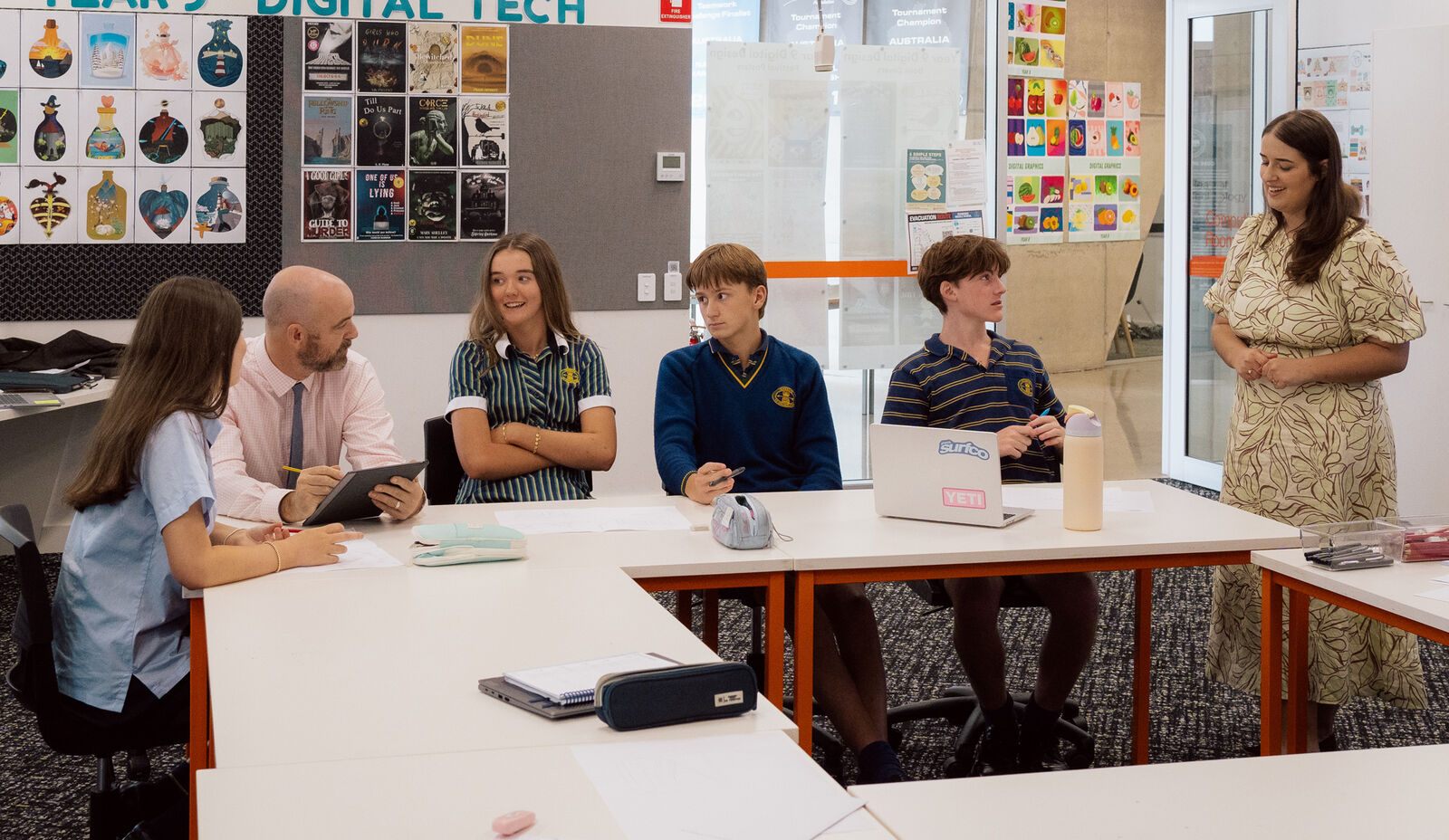
With the backing of the Pembroke Foundation, the Didi Medlin Centre launched the Instructional Coaching Program in 2025, providing bespoke and sustained support for teachers to reflect on and refine their practice. While instructional coaching can take many forms, at its core it is a structured and supportive process that enables teachers to engage deeply with their professional growth. Jim Knight, widely regarded as the most influential academic figure in this field, defines instructional coaching as helping teachers develop ‘a clear picture of current reality, a clear picture of a preferred future, and a clear path from one to the other.’
Instructional coaching at Pembroke is grounded in Knight’s Partnership Principles, which emphasise teachers as professionals working alongside expert peers. Coaches listen carefully, ask purposeful questions and support reflection, while maintaining teacher agency in decision making. Coaches also assist their partners to measure impact within a confidential and supportive environment where experimentation and reflection are actively encouraged. Through what is known as the Impact Cycle, coaching pairs follow a structured process that may include multiple ways of understanding current reality, measuring impact and identifying refinements or interventions. Observation, video footage, student feedback and other data sources form vital tools in this work.
Last year, 32 teachers from across all campuses and with a wide range of experience partnered with our six instructional coaches. Teachers focused on diverse aspects of practice, including questioning techniques, student engagement, classroom management and the collection of evidence aligned to AITSL standards. These partnerships have led to meaningful impacts on teacher practice and, in turn, on student outcomes. When reflecting on the experience, several key themes emerged.
A safe space and time to reflect on practice
The confidential, curious and non-judgemental relationships formed between teachers and coaches were consistently identified as central to the program’s success. One teacher reflected, ‘I have never felt more heard.’ Many participants highlighted the openness and generosity of spirit within coaching conversations, noting the psychological safety that allowed them to engage honestly with their practice. Others emphasised the importance of time, describing it as essential for deep professional reflection. As one teacher explained, ‘It afforded me the time to deeply unpack what is occurring in my classroom, which is something we may not always have capacity for in the busyness of everyday school life.’
Pembroke’s coaching model is notably generous in its time allocation, with coaches often assuming yard duties or relief lessons to create protected space for reflection. This commitment ensures instructional coaching is experienced as deep and meaningful professional learning rather than a compliance exercise.
Seeing practice differently through evidence
A distinctive feature of the Impact Cycle is its deliberate use of evidence to understand classroom reality and measure impact. This requires teachers to be both vulnerable and objective. While a range of data collection approaches were used, video footage emerged as particularly powerful. One teacher commented, ‘While initially I found this awkward, I soon lost sight of the actual people in the video and focused on the technique, and it was incredibly illuminating. You rarely see yourself in action.’
Teachers who experienced live observation also valued the opportunity to share their classroom with a trusted colleague. As one long-serving teacher noted, ‘The experience of having a colleague observe my teaching was supportive and affirming.’ Others who used student focus groups or interviews described gaining deeper insight into student experiences. One teacher reflected, ‘I had little idea as to their reasons for not always engaging. This direct feedback allowed me to make individual changes to my interactions, with instantly better outcomes for both teacher and student.’
From reflection to deliberate action
Participants consistently reported that coaching led to tangible changes in classroom practice. One teacher explained, ‘Through the process, I have become more deliberate in the type of questions I ask my class. I have developed strategies such as pre-designing questions for use during the lesson or using a second prompt to require students to clarify their thinking. This has improved student outcomes significantly.’ Others refined their approaches to group work, placing greater emphasis on collaboration and intentional role design. Informal assessment of
student understanding was another common focus, with teachers developing purposeful strategies to check learning and adapt instruction responsively.
A mutually beneficial relationship
For the coaching team, the experience also generated significant professional growth. One coach reflected, ‘I have engaged with thoughtful and honest reflections on practice that have inspired me to consider my own teaching with greater enthusiasm for development.’ The strong relationships formed through coaching partnerships fostered increased collegiality and, in some cases, new initiatives. One partnership led to English as an Additional Language students in the Middle School working alongside Reception classes, creating rich learning experiences for both cohorts.
Coaches frequently described the reward of witnessing colleagues’ moments of insight as new strategies succeeded. As one coach wrote, ‘The most valuable moments have arisen
when we have discovered something together. That discovery seems to sustain the type of enthusiasm usually reserved for early career teachers.’
In 2026, the Didi Medlin Centre has expanded its work to include specialist technology coaching and leadership coaching, available to both teaching and professional services staff. We look forward to seeing these programs continue to grow and strengthen professional learning across the School.
Simon Miller
Dean of Professional Growth and Development