

23 February 2026
The Future Pathways team always relishes the opportunity to reconnect with our old scholars. Within their stories are powerful reminders that pathways are rarely linear. They are shaped by curiosity, courage, recalibration and often, a willingness to pivot. Just as importantly, these conversations reflect the enduring connection our students feel to the Pembroke community after they graduate.
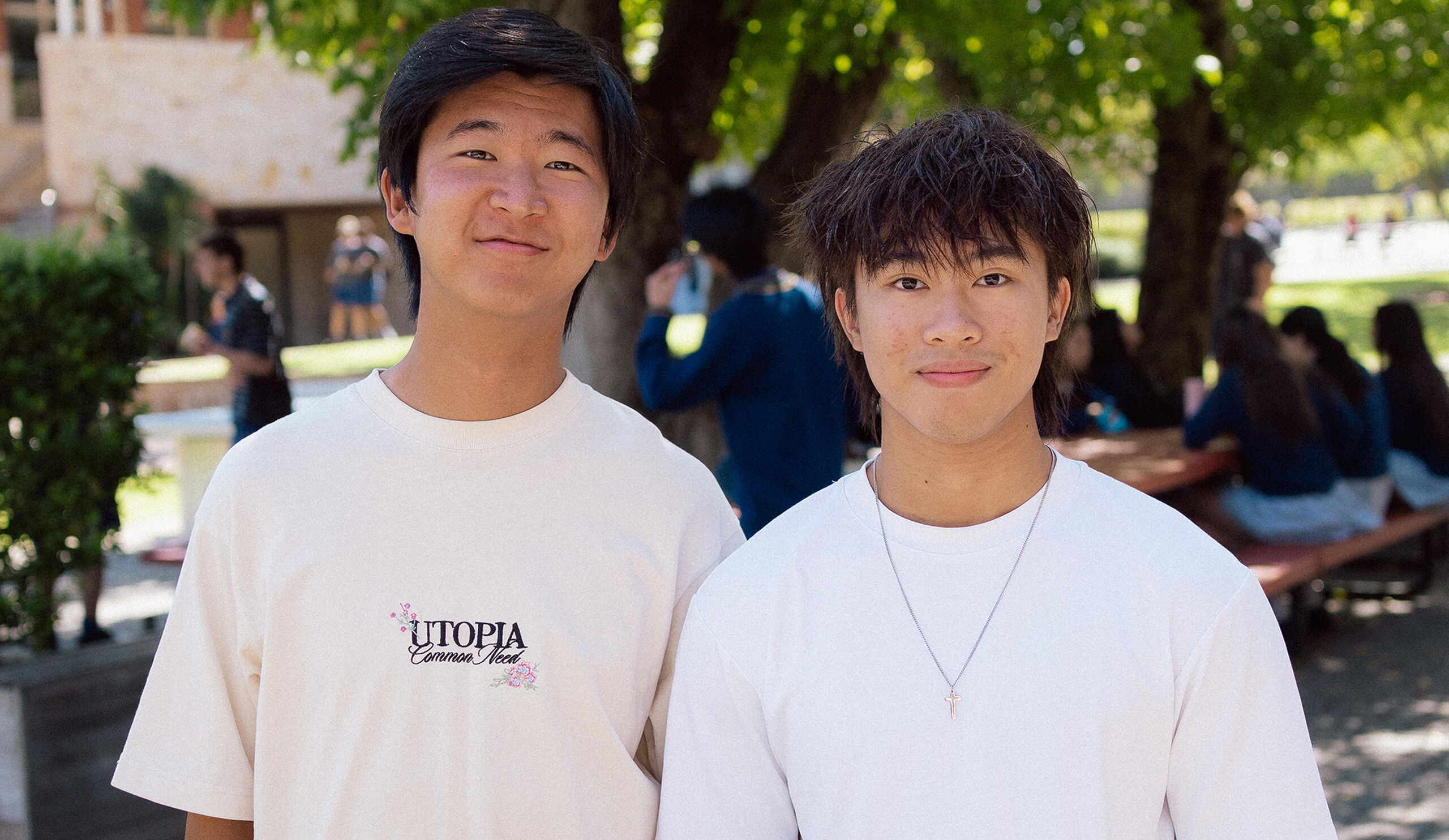
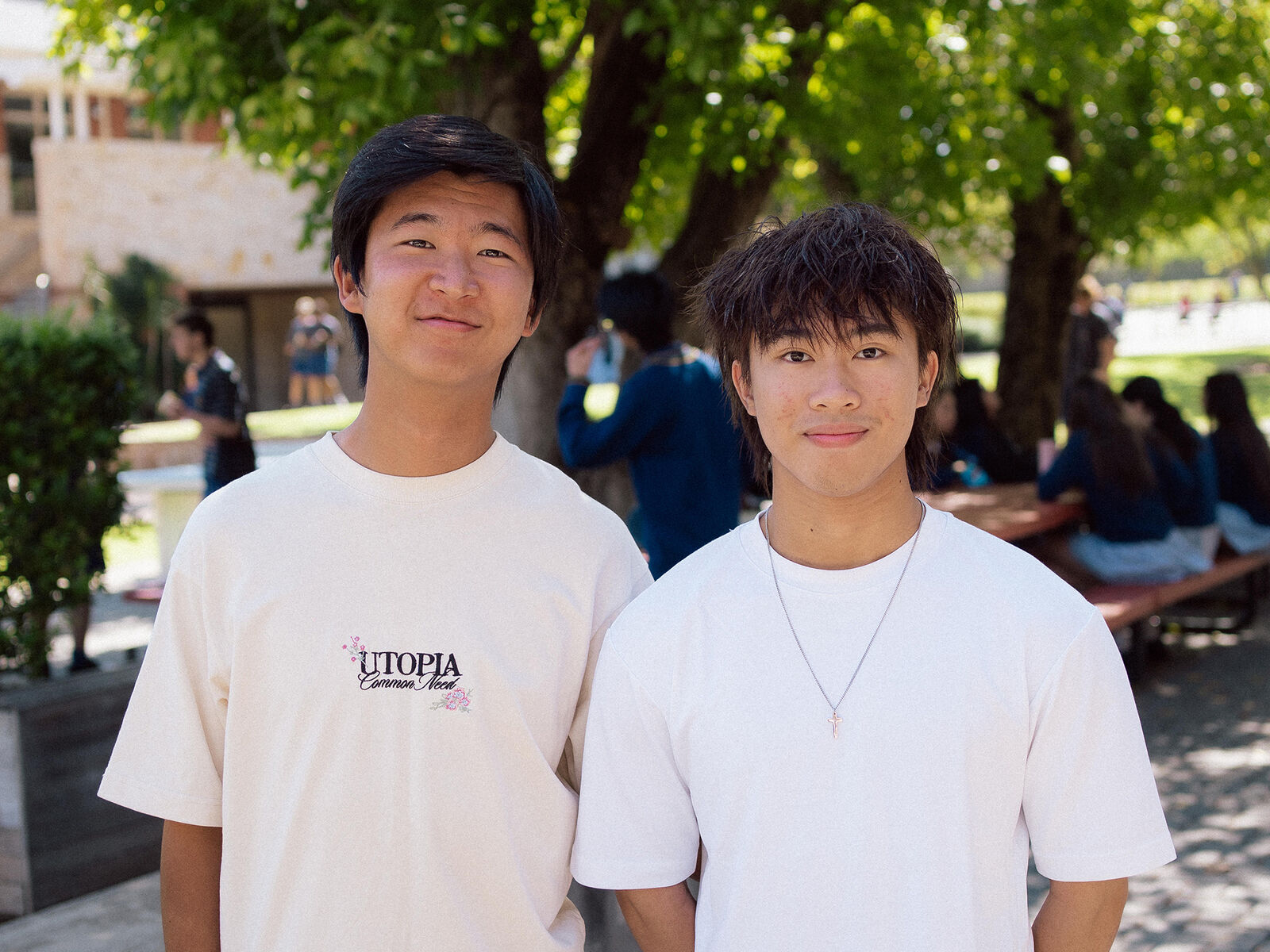
Recently, we sat down with Tiger Jia (2023) and Jonathan Lee (2024) to hear about their journeys since leaving Pembroke.
First of all, Tiger – when you left Pembroke, what did you initially choose to study?
I started a double degree in Engineering and Finance in 2024. That was the plan straight out of school.
At what point did you realise that might not be the right fit?
Second year uni, well, technically after the first semester. We were doing an engineering project and I remember thinking, 'Is this really what I picture myself doing long term?' It didn’t quite sit right. That’s when I started looking at alternatives.
What made you consider teaching?
Education popped up as I was exploring options, and it made sense. I’ve been in school environments for a long time, and I genuinely enjoy explaining things. I was tutoring primary students down near Glenelg at the time, and that confirmed it for me. I thought, 'This is actually something I wouldn’t mind doing.'
Was it difficult to change direction?
Not really. Maths has always been strong for me, and Chinese is essentially my first language, so that felt very natural. A lot of my Maths credits from engineering could cross over anyway. It felt more like a redirection than a complete restart.
What are you studying now?
I’m studying Secondary Education, specialising in Maths and Chinese. I’ll finish in 2028.
I’ve been in classrooms, just not in a full teaching practicum role so far. I enjoy the course as it feels more aligned with who I am. And when I looked into it, Maths teachers are in high demand so that’s reassuring too.
When you’re a teacher, who would you like to emulate?
Mr Clark. I had him for English in Year 11 and 12. He was very kind in his teaching and someone everyone looked up to. He made things clear and purposeful. He’s someone I’d like to emulate.
Jonathan – well done on gaining a place at UNSW for their Actuarial Studies degree. It’s incredible competitive, isn’t it?
UNSW is one of the strongest institutions in the world for Actuarial Studies, and it’s one of the few universities accredited by the professional actuarial bodies. That accreditation is important because if you graduate from an accredited program, you can skip some of the professional exams required to become a qualified actuary. That makes it a very attractive course.
What actually is an actuary?
An actuary calculates risk. It’s essentially risk management. Most people think of insurance companies, and that’s a big pathway, but it’s broader than that. You’re using maths, statistics and modelling to assess financial risk and uncertainty.
Did you always know you wanted to do Actuarial Studies?
Not really. What I studied in school wasn’t directly related to actuarial work. After exams, I started researching different degrees and spoke to a few of my parents’ friends who were already working as actuaries. I asked them to describe the job, and it sounded interesting. That’s what led me to apply.
Was UNSW your first choice?
Yes, I’m pretty sure it was my first choice. My other preferences were mostly engineering degrees, because that was another area I was considering at the time. I live on campus at Philip Baxter College. Being in college has shaped my experience a lot as you meet so many new and different people. It’s actually very easy to make friends because everyone is new and everyone is living away from home. There’s a shared experience in that transition. It makes the university experience very social and very immersive.
Some of our students hesitate to apply interstate because they worry about cost. Is it expensive?
It can be expensive, especially with college accommodation, but there are a lot of scholarships available. Many students receive subsidies or even fully funded accommodation. It really depends on eligibility. I think sometimes students don’t realise how many financial support options exist.
It was an absolute joy to reconnect with both Jonathan and Tiger and to hear their stories unfold. In very different ways, they capture what we value most in Future Pathways: curiosity, courage and connection. Jonathan’s thoughtful research, his willingness to apply for one of the most competitive courses in the country, and his leap interstate to UNSW reflect quiet confidence and ambition grounded in preparation. Tiger’s pivot from Engineering and Finance into Education shows maturity and reflection as well as the self-awareness to choose alignment over prestige.