

20 May 2026
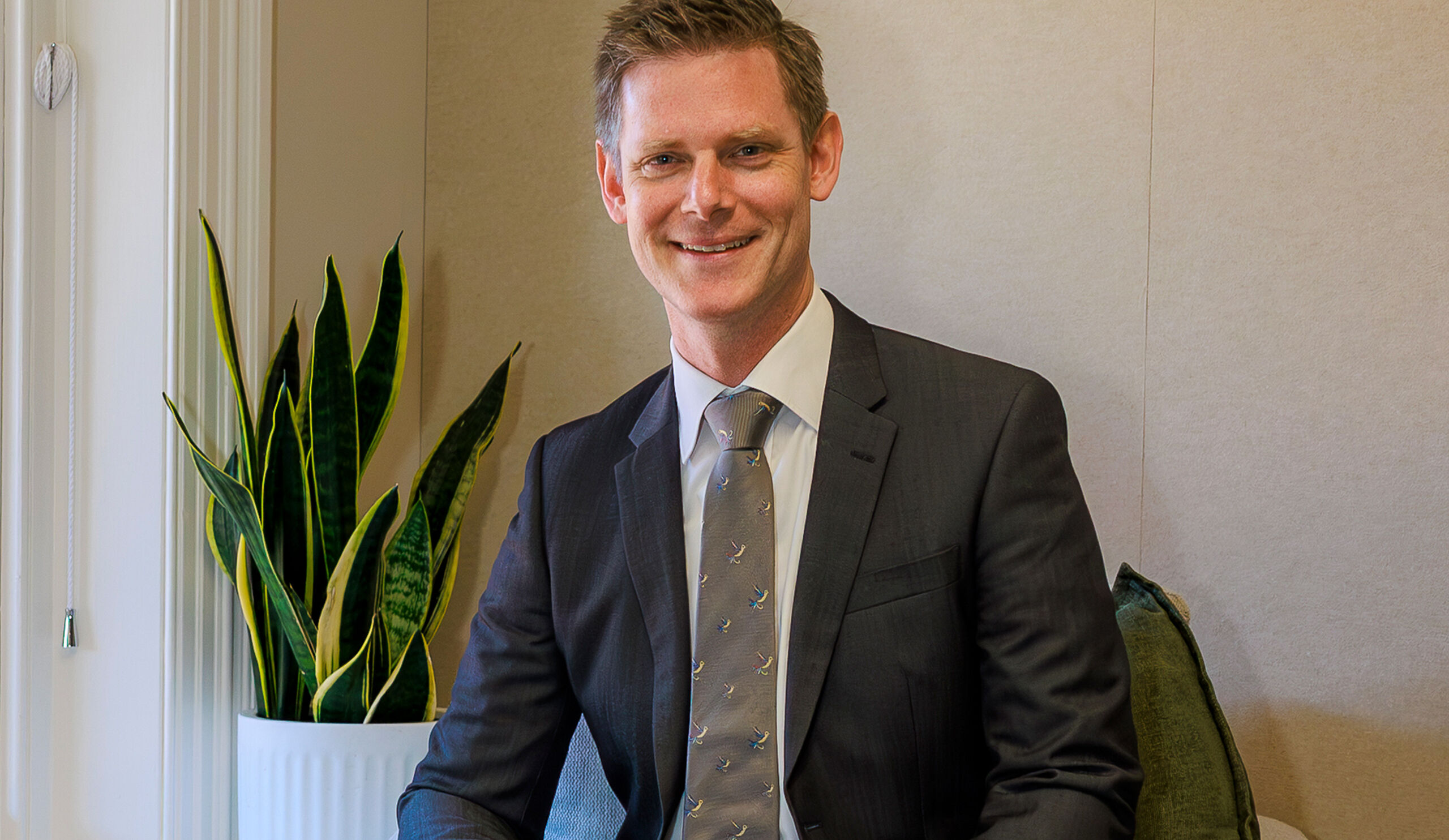
He spoke to old scholar Kate Holland (1992) about the reality of his profession and how, with Pembroke’s support, he’s also studying at Oxford.
Was an IT role always your ambition?
I knew I wanted to work in technology when I finished school, so I started a computer science degree at UniSA. It was focused on software development, which didn’t really set my world on fire. I persisted for about 18 months before taking a role in the technical support team at Optus.
A colleague mentioned that he’d done a diploma in networking engineering at TAFE, and it sounded like exactly what I wanted to learn. When I finished in 2007, I completed numerous network-related certifications before landing my first non-helpdesk job as a network engineer.
My sink-or-swim moment came when I was 23, working for Mitsubishi Motors Australia. I was brought on in a split role, assisting the current head of network engineering and the system administrator. The former wasn’t big on communicating. When he announced he was moving on, I was asked to ‘temporarily’ assume his role on short notice. I picked it up and ran with it.
It was a combination of super stressful and super exciting. The network was business-critical. If anything went down, car manufacturing stopped, which meant millions of dollars in lost revenue.
You must have vast technical expertise?
When I first started working, I assumed everyone was an expert who knew exactly what they were doing. It’s often not the case. As a leader, understanding the strengths and weaknesses of your team is critical to managing the constant ebb and flow. Fortunately, I really enjoy interacting with people – we are all fascinating. Unlike a computer, people respond differently to the same question depending on their mood, the time of day or the weather!
My technical experience and fundamental understanding give me credibility, of course, and help me dig deeper when needed. So, depending on what the team is working on, I can quickly come up to speed to understand if we may need to take an alternative approach or not. I’ve always enjoyed the technical aspects, and that’s unlikely to change!
How did you end up at Pembroke?
From an IT perspective, schools are often underserved when it comes to technology maturity. Our future generations are coming through schools, and they deserve the same levels of access to technology tools as any other organisation. I knew Pembroke would be a great place for me because I could apply learnings from corporate roles, as the principles remain the same.
As with all organisations, the school has critical systems that must be available for it to operate. It’s part of my role (and the wider team's) to ensure this continues, as well as plan for future strategic and operational requirements. The tech mindset is very different from 20 years ago.
Because the systems don’t knock off when the kids do, do they?
Certainly not. Nowadays, everyone is plugged in for far longer. The system runs 24x7x365. Our focus has been on operating more like a contemporary ICT function. Some of that work isn’t technical. It’s change management and communicating properly about what’s happening, when, and why.
We’ve also set clear projects and initiatives for the last three years that align with different parts of the school’s strategic plan to ensure all our actions are linked to a purpose.
How easy is it to predict a day at work?
Every day is different! There’s the proactive strategic part that we plan for and can control, as opposed to the operational business-as-usual part, which can be highly variable and requires flexibility.
Are AI and cybersecurity priorities?
AI and Cybersecurity are the two main areas that ‘keep me awake at night’ and are a focus at Pembroke. I've done a lot of personal professional development and study in this area, and my current study at Oxford is an MSc in Software and System Security
Cybersecurity challenges are constantly evolving because of new attack vectors that AI tools have enabled. We undertook a significant project 24 months ago, moving our server infrastructure to purpose-built data centres in off-site locations, to give us a lot more redundancy and protection from not just cyber-related attacks, but also general failures.
How we should be engaging with AI, as students and staff, is another complex ongoing consideration.
What made you want to study at Oxford?
It’s a bucket list thing. I'd already done some distance learning with the Oxford Continuing Education Department. Plans to do a postgraduate degree had been deferred several times because I had too much going on.
Late last year, I realised it had been almost ten years since I applied and got accepted, and it felt like now or never. I spoke with Principal Mark Staker, who was incredibly supportive. I’ve been in other workplaces with managers who were far less invested. Pembroke has supported me with time, annual leave and some financial assistance.
I was over there in June, and it was incredible. The access to world-class thinkers, historical significance and a constant stream of interesting people was mind-blowing. I attended presentations from the UK National Quantum Computing Centre and Google in one day alone, which was eye-opening. Both speakers were incredible and would be a keynote speaker anywhere else!
What’s your advice for people pursuing an IT path?
Having an interest and passion is a must. This way, when it gets hard, as things always do, you’ll still see the light at the end of the tunnel.
Learn how to communicate well with others, no matter what role you have. This includes picking up non-verbal cues when things aren't going well, but no one’s speaking up.
If you get to a point where you're just going through the motions, take action to change it!
Kate Holland (1992)
Pembroke Alum